
Residential & commercial service
Fence Cleaning & Wood Restoration
Fence cleaning removes gray weathering, algae, dirt, and irrigation stains from wood and vinyl fencing. Wood gets low-pressure washing with a sodium percarbonate cleaner and an optional brightener that reverses the gray; vinyl gets a soft wash that dissolves the grime and mildew film. High pressure shreds fence boards, so on fences the chemistry leads and the pressure follows.
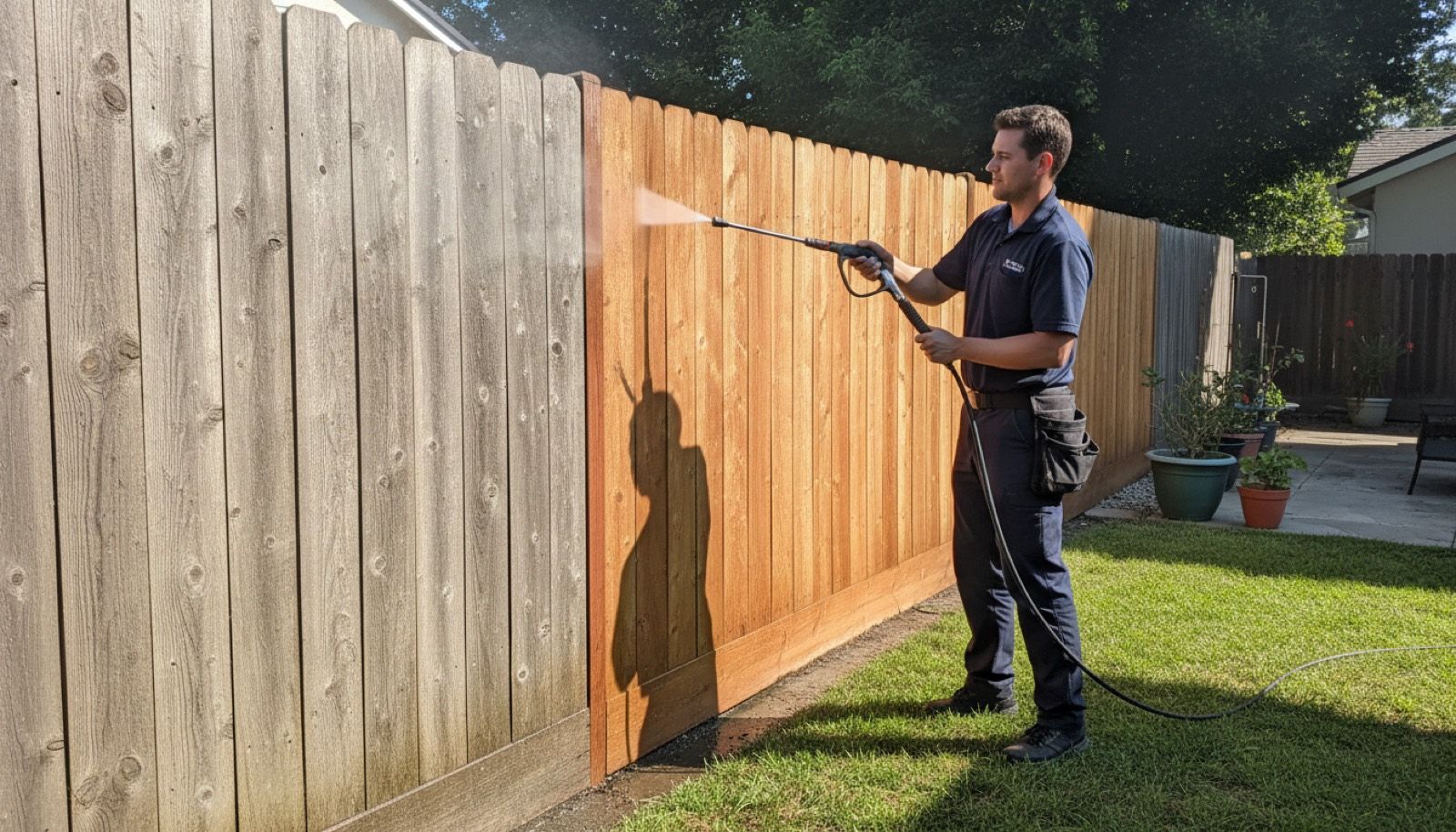
What Fence Cleaning Includes
We clean wood privacy fences, vinyl fencing, gates, and posts, one side or both. Wood service includes pre-treatment with a percarbonate-based wood cleaner, a controlled low-pressure wash, and an optional oxalic-acid brightening step that neutralizes the cleaner and pulls the wood back toward its original tone. Vinyl service is a soft wash that strips the mildew and grime film without scouring the surface. Sprinkler rust staining along the bottom rail gets targeted rust chemistry, because pressure alone will not remove it.
Why Your Fence Turned Gray, and Why It Is Reversible
Sun breaks down lignin, the natural glue in wood fibers, and the degraded surface layer oxidizes to gray. That gray is only a thin skin. A percarbonate cleaner loosens the dead gray fiber and embedded grime, gentle pressure rinses it away, and a brightener drops the pH back down and revives the tone underneath. The transformation on a redwood or cedar fence is dramatic, and it is real cleaning, not paint. It is also the mandatory prep step if you plan to stain, because stain over gray oxidation fails early.
The Case Against Blasting a Fence
Fence boards are thin, soft, and often decades old, and a pressure washer at high settings acts like a wood-carving tool against them. Too much pressure furs the grain, gouges soft spring wood out from between the harder growth rings, and leaves a rough, striped surface that splinters and grays even faster. Our approach runs low pressure with wide fan tips, keeps the wand moving with the grain, and lets the cleaning chemistry do the heavy lifting. Old, brittle fences get extra restraint, and we will tell you honestly if a fence is too far gone to wash safely.
What Valley Fences Collect
The north side of every fence in fog country grows green. Tule fog and winter shade keep that face damp long enough for algae to establish, while the sunny side bleaches gray, so most fences out here age in two directions at once. Along the bottom, hard irrigation water paints orange rust lines wherever sprinklers hit the boards, and summer loads the whole fence with ag dust that rain turns into a gray wash. None of it is permanent, and all of it responds to the right chemistry.
Cost and Timing
Linear footage, one side versus both, wood versus vinyl, and condition set the price, with brightening and rust treatment as clearly listed add-ons. Every job gets a written flat quote first. On timing: clean before you stain, clean in spring if algae is the problem, and figure on a wash every couple of years to keep a stained fence looking maintained rather than starting over.
Questions We Actually Get
Can my gray fence really look new again?
In most cases, yes, and the change is bigger than people expect. Gray weathering is a thin oxidized surface layer, and the cleaner-plus-brightener process removes it and revives the tone of the wood underneath. Deeply cracked, cupped, or rotted boards are structural problems cleaning cannot fix, and we will point those out during the quote.
Should I clean my fence before staining it?
Yes, without exception. Stain applied over gray oxidation and grime bonds to the dead surface layer instead of sound wood, and it peels or blotches within a season or two. Cleaning and brightening give the stain fresh fiber to grip. Let the fence dry for several days after washing before any stain goes on.
Will you damage the boards with the pressure washer?
No, because we do not clean fences the way people fear. Wood fencing gets low pressure through wide fan tips, always moving with the grain, with a percarbonate cleaner doing the real work. The shredded, fuzzy fences you have seen are what happens when concrete-level pressure meets soft wood, and that is exactly the approach we built our wood process to avoid.
Do you clean both sides of the fence?
Whichever sides you want and can authorize. Many customers do their own side only; others coordinate with the neighbor and split a both-sides job, which is more efficient in one visit. We only need access and permission for whatever side we are washing, and we are careful with landscaping on both sides of the line.
Why does the green come back on one side of my fence?
Because the conditions that grew it have not changed: that face is shaded, stays damp through fog season, and algae recolonizes wherever moisture lingers. Cleaning kills and removes the current growth, and a post-treatment slows the return, but a north-facing fence line in fog country will eventually green again. A quick maintenance wash every year or two keeps it ahead of the curve.
Ready to make it look new again?
Fast scheduling. Photo-documented results. A written quote before any work starts.