
Residential & commercial service
Graffiti Removal
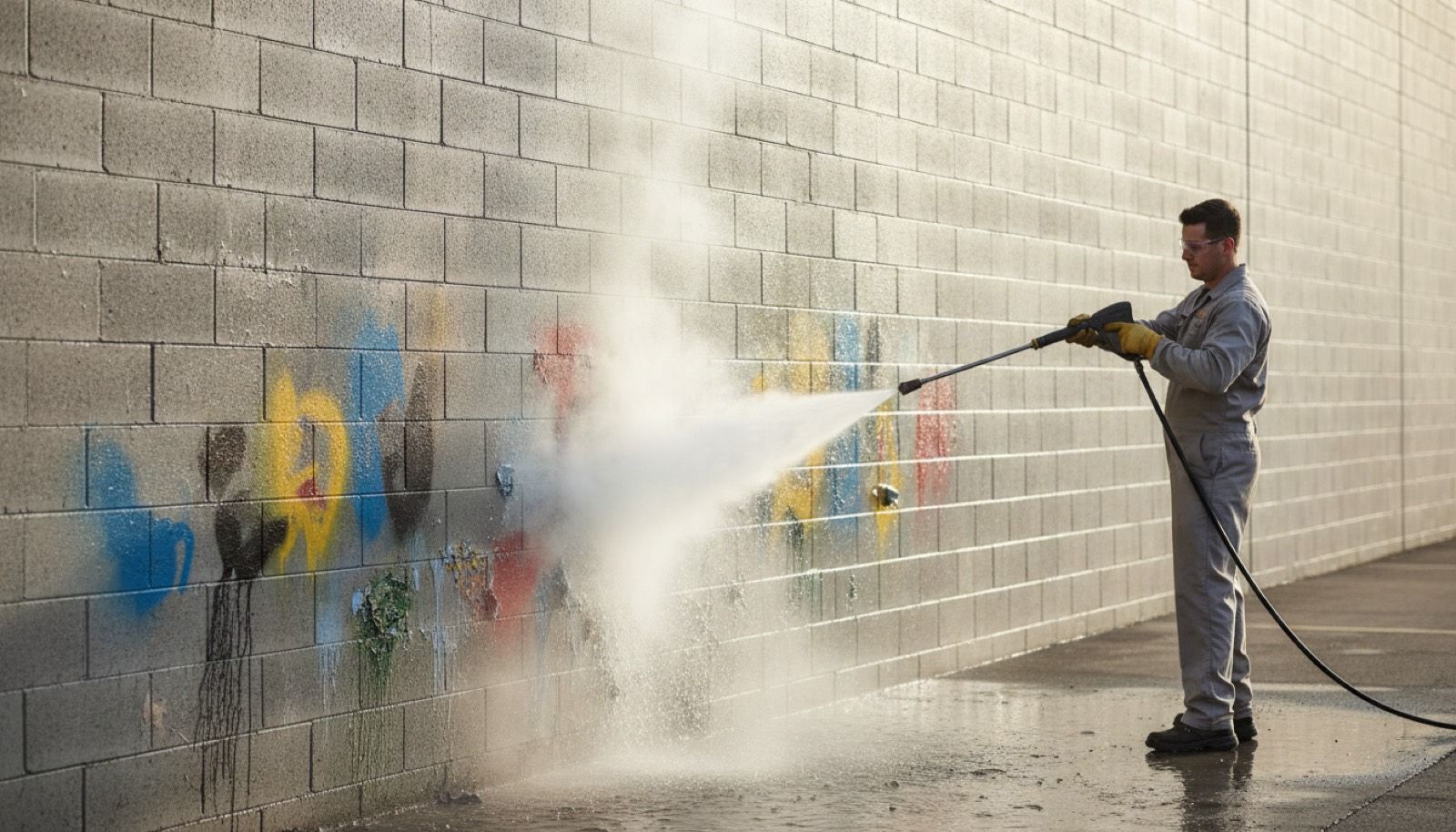
Graffiti removal strips spray paint, marker, and ink from walls, fences, and hard surfaces using chemistry matched to the substrate, followed by a controlled rinse. Porous masonry takes solvent gels and hot-water pressure rinsing; painted surfaces take gentler chemistry at low pressure so the removal does not create a ghost patch worse than the tag. Speed matters most, because paint that cures into porous block gets harder to remove by the day.
What Graffiti Removal Includes
We remove graffiti from block walls, brick, concrete, stucco, wood and vinyl fences, metal roll-up doors, dumpster enclosures, signs, and sidewalks. Every job starts with a small test patch in an inconspicuous spot, because the tag, the substrate, and the substrate's existing coating all change which product and pressure combination is safe. Commercial properties, HOAs, and property managers can set up priority response so a tag reported in the morning is gone before it advertises for long.
The Method Depends on the Surface
On bare masonry and concrete, spray paint soaks into the pores, so removal means a solvent gel that dwells and softens the paint, followed by a hot-water pressure rinse that flushes it out of the pore structure. On painted walls the calculation flips: aggressive solvent or high pressure takes the wall paint off with the tag, so we work with milder chemistry at low pressure and accept that some painted surfaces are better repainted than stripped. Metal doors, signs, and smooth surfaces usually release paint readily with the right solvent and careful technique. Matching method to surface is the whole trade.
Why Speed Is the Biggest Factor in Results
Fresh spray paint sits closer to the surface and has not fully cured, so it releases cleanly. Give it weeks of Valley sun and the paint hardens, bonds, and migrates deeper into porous block, and each pass gets less back. Fast removal also has a documented deterrent effect: taggers want their work seen, and walls that clear within a day or two get hit less over time than walls where tags linger. If your property gets tagged, the cheapest removal you will ever buy is the immediate one.
Ghosting, Shadows, and Honest Expectations
On old or deeply soaked tags, complete removal sometimes leaves a faint shadow in porous masonry where paint penetrated beyond reach, and removal on a weathered painted wall can leave a clean patch that stands out against the grimy paint around it. We manage both honestly: the test patch tells us what full removal will look like, and when a repaint or a full-wall cleaning is the better cosmetic answer, we say so before the work, not after. For repeat-target walls, sacrificial anti-graffiti coatings make every future removal faster and cleaner, and we can discuss whether one fits your site.
Cost Factors and Response
Square footage of coverage, substrate type, paint type and layers, and how long the tag has cured drive the price, and multi-color pieces take more passes than a single-color scrawl. Everything is put in a written flat quote. For businesses and HOAs that deal with recurring tagging, a standing arrangement with fast response is usually cheaper per incident and dramatically better for how the property presents. Call (209) 624-6249 and send us a photo of the tag to get a quote moving fast.
Questions We Actually Get
Can graffiti be removed without leaving a shadow?
Often yes, especially when the tag is fresh and the surface is sound. Shadowing risk climbs with cure time and substrate porosity: paint that has soaked deep into old concrete block can leave a faint ghost even after thorough removal. Our test patch shows you the realistic outcome before we commit to the full wall, so there are no surprises.
How quickly should graffiti be removed?
As fast as possible, ideally within a day or two. Fresh paint releases far more cleanly than cured paint, and quick removal discourages repeat tagging because the work never stays visible. Waiting weeks makes the removal harder, the result less perfect, and the wall a more attractive target.
My painted wall got tagged. Do you remove it or should I just repaint?
It depends on the wall, and we will tell you straight after the test patch. Mild chemistry at low pressure can lift many tags off sound painted surfaces, but if the wall paint is old, chalky, or faded, removal may leave a clean bright patch that looks worse than a color-matched repaint would. Sometimes the right call is removal; sometimes it is prep and paint. We quote whichever actually serves the property.
Can you remove graffiti from a wood fence?
Frequently yes, though wood is the most demanding substrate. Paint grips wood grain, and the low pressure wood tolerates limits how hard we can rinse, so results depend on the paint, the age of the tag, and the condition of the fence. Options run from chemical removal to cleaning and re-staining the affected section, and the test patch tells us which route wins.
We get tagged repeatedly. What are our options?
Two things work together: fast standing removal and protective coating. A priority-response arrangement gets each tag off within days, which is proven to reduce repeat hits over time. For walls that keep getting targeted, a sacrificial anti-graffiti coating lets future tags rinse off quickly without harsh chemistry, then gets reapplied. We can set up both for commercial properties and HOAs.
Ready to make it look new again?
Fast scheduling. Photo-documented results. A written quote before any work starts.