
Residential & commercial service
Patio & Deck Cleaning
Patio and deck cleaning removes algae, mildew, dirt, and weathered gray buildup from your outdoor living surfaces. The method depends entirely on the material: concrete gets high-pressure surface cleaning, pavers get moderate pressure that respects the joint sand, and wood and composite get low pressure with cleaning solutions doing the work. Using one setting for everything is how decks get destroyed, so we match the method to the surface every time.
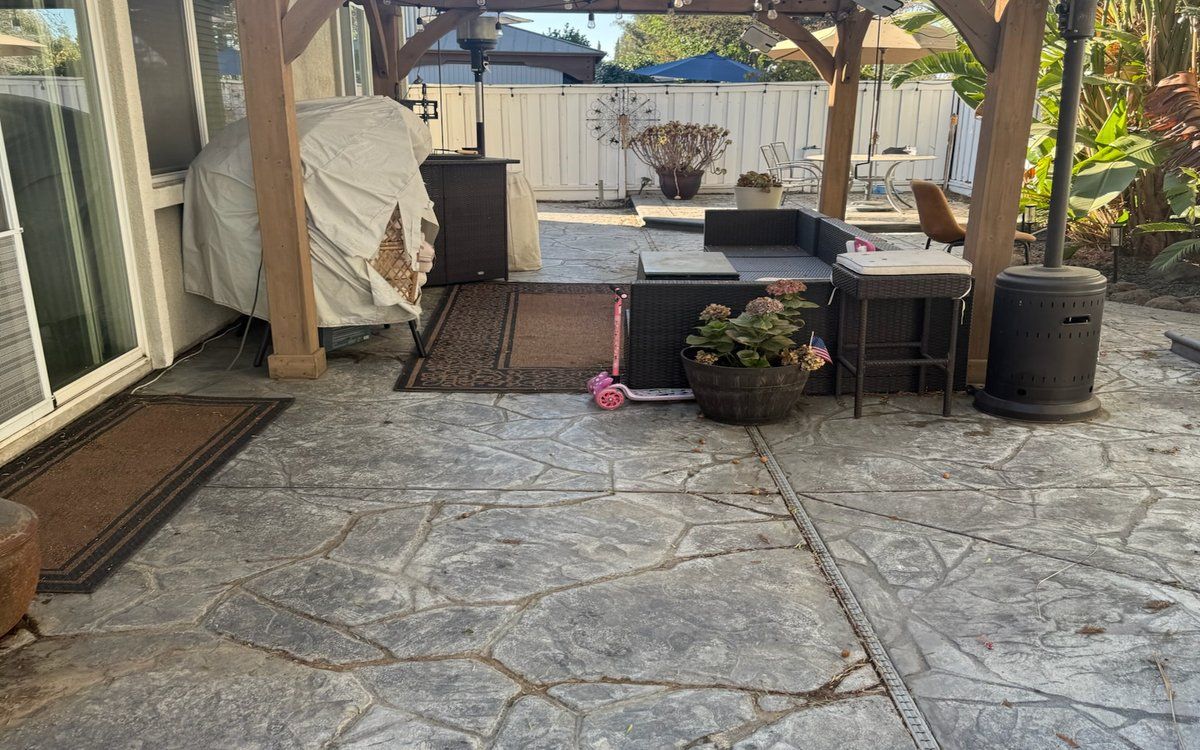
What Patio and Deck Cleaning Includes
We clean concrete patios, paver patios, natural stone, wood decks, composite decking, steps, and railings. The job includes pre-treatment of organic growth, the wash itself, and a full rinse-down of surrounding surfaces so dirt from the patio does not end up on your walls or in your pool. On paver work we watch the joint sand and let you know if re-sanding is needed afterward. On wood we can follow the cleaning with an oxalic-acid brightener that takes the surface from gray back toward its natural tone.
One Method Does Not Fit All Surfaces
Concrete flatwork takes high pressure happily, so it gets the same surface-cleaner treatment as a driveway. Pavers need more restraint: enough pressure to clean, not enough to blast the polymeric sand out of every joint. Wood is where most DIY damage happens. A pressure washer at concrete settings shreds deck boards, leaving furred, splintered grain that never looks right again. We wash wood at low pressure with a wide fan tip, working with the grain, and let a sodium percarbonate cleaner lift the gray oxidation and embedded dirt. Composite decking gets soft washing consistent with manufacturer guidance, because high pressure can void composite warranties and scar the cap layer.
Why Valley Patios Turn Green and Slick
Shaded patios in this region grow a film of algae and mildew that gets genuinely dangerous when wet, and winter is when it thrives. Tule fog keeps outdoor surfaces damp for days at a stretch, north-facing patios barely dry between storms, and Delta-adjacent and Tri-Valley homes carry enough ambient humidity to feed growth most of the year. Add falling leaf tannin, barbecue grease, planter rust rings, and a summer coating of ag dust, and an outdoor space can look abandoned in a couple of seasons even when the hardscape underneath is perfect.
What Affects the Cost
Surface area, material, and condition are the big three. Wood that has gone years without care takes cleaning plus brightening, which is more product and more time than a maintenance wash. Multi-level decks, railings, and stairs add labor. Pavers that need re-sanding after cleaning are a separate line item we discuss up front. Everything lands in a written flat quote before work begins.
The Right Time to Schedule
Spring is the natural window: winter growth gets removed before outdoor season, and surfaces are ready for guests, furniture, and bare feet. If you plan to stain or seal a wood deck, cleaning and brightening come first, followed by several dry days before coating, and we can time the wash so your finish goes onto properly prepared wood. A fall cleaning also makes sense for patios that host through the holidays.
Questions We Actually Get
Will pressure washing ruin my wood deck?
High pressure absolutely can, which is why we do not use it on wood. Concrete-level pressure tears into soft deck boards and raises a furred, splintered surface that is painful underfoot and hard to repair. Our wood process runs low pressure with a fan tip, works with the grain, and relies on a percarbonate cleaner to lift the gray so the pressure never has to do damage-level work.
Can you clean composite decking like Trex?
Yes, with a soft wash approach consistent with what composite manufacturers call for. Composite boards have a cap layer that high pressure can scar, and aggressive washing can void the warranty. Low pressure with the right cleaner removes the mildew film and grime composite is prone to, without harming the boards or the coverage.
My patio gets slippery every winter. Can you fix that?
Yes. That slick film is algae and mildew feeding on winter moisture, and removing it restores real traction. A post-treatment slows regrowth, but shade and dampness mean it will eventually return, so shaded patios do best on a yearly cleaning schedule before or just after winter. It is a genuine safety issue, especially on steps.
Should I clean my deck before staining or sealing it?
Always, and it is the step that decides whether the finish lasts. Stain applied over gray, dirty wood peels early and traps grime under the coating. Clean, brightened, fully dried wood takes stain evenly and holds it. Give the deck several dry days between our wash and your coating, and check the forecast before you commit a weekend to staining.
Will cleaning pavers wash out the sand between them?
Some joint sand loss is normal even with careful moderate-pressure work, and we minimize it by controlling angle and distance. If joints come up short afterward, re-sanding with polymeric sand locks the pavers back in and resists weeds and ants. We flag the condition of your joints during the quote so re-sanding never comes as a surprise.
Ready to make it look new again?
Fast scheduling. Photo-documented results. A written quote before any work starts.