
Residential & commercial service
Solar Panel Cleaning
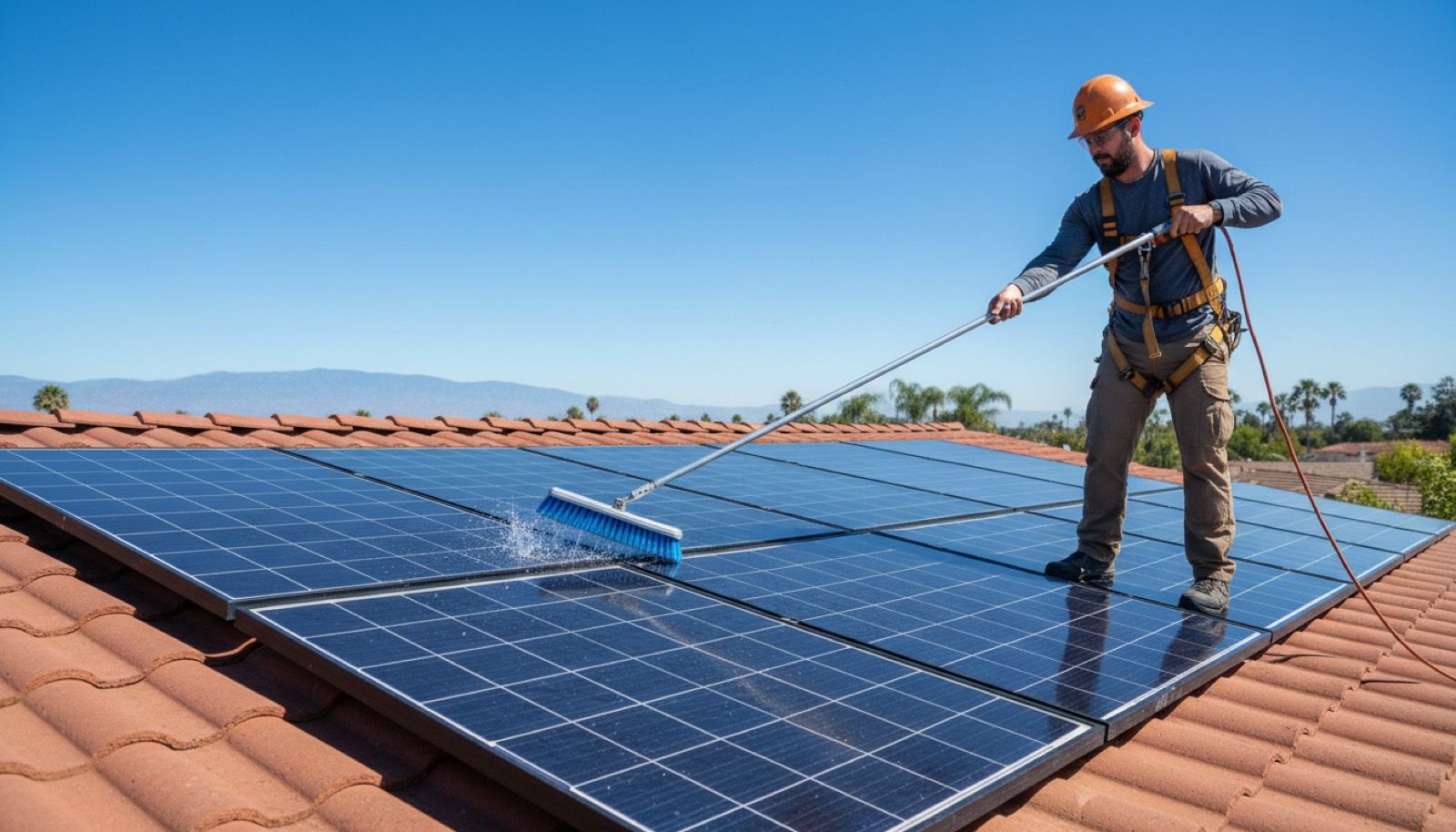
Solar panel cleaning removes the dust, pollen, ash, and bird droppings that block sunlight from reaching your cells. We clean with purified, deionized water and soft brushes only: no detergents, no hard tap water, and never a pressure washer, which can crack glass, damage seals, and void panel warranties. Clean glass means more light in and more power out.
What Solar Panel Cleaning Includes
We clean the full array, roof-mounted or ground-mounted: panel glass, frames, and the visible edges where grime dams build up along the lower frame lip. Bird droppings get soaked and lifted rather than scrubbed dry, since dried droppings can abrade glass if attacked carelessly. We work from ladders, roof, or extension poles depending on the array, and we note any visible physical issues we see up close, like cracked glass or lifted flashing, so you can raise them with your installer.
Why Deionized Water and Nothing Else
Panel glass often carries an anti-reflective coating, and the wrong cleaning attacks it from two directions: harsh detergents can degrade the coating and leave a light-blocking film, and hard tap water dries into mineral spots that do exactly what dirt does. Deionized water solves both. With the minerals filtered out, the water grabs dirt aggressively, a soft brush loosens the grime, and the rinse dries spot-free with zero residue. No pressure washer is ever involved, because concentrated pressure can crack cells, force water past frame seals into the junction area, and void the manufacturer warranty in the process.
The Central Valley Is a Hard Place to Keep Panels Clean
This region combines nearly everything that soils solar. Long dry summers mean months of dust accumulation with no rain to rinse it, and harvest season around orchards and field crops can coat an array in days. Wildfire season adds ash. Spring adds pollen. And sprinklers that overspray a ground-mount or low roofline bake hard-water mineral spots onto the glass, which block light just like dirt but will not rinse off. Panels in this valley get dirtier faster than panels almost anywhere, which is exactly why cleaning pays here.
Timing, Safety, and Thermal Shock
We clean early in the day or in mild conditions for a practical reason: hitting hot glass with cool water stresses it, and cool panels also clean more easily because grime has not been baked on by the day's heat. Roof work is done with proper access equipment and care for your roofing, and on tile roofs we apply the same no-unnecessary-steps discipline we use on roof cleaning jobs. Ground-mount arrays are simpler and faster, which shows up in the quote.
Cost and How Often to Clean
Panel count, roof height and pitch, and array accessibility drive the price, and every job gets a written flat quote up front. For most Valley systems, once or twice a year is the right cadence: a post-harvest or late-summer cleaning at minimum, and a second visit after fire season or spring pollen for arrays near heavy soiling sources. If your monitoring app shows production drifting down with no weather explanation, that is usually dirt talking.
Questions We Actually Get
Does rain clean solar panels?
Not meaningfully, and sometimes it makes things worse. Rain rinses light dust but leaves the bonded grime layer, and rainwater carries its own dust that dries in spots. It also does nothing about bird droppings or the grime strip along the bottom frame edge. Months of Valley summer pass with no rain at all, which is exactly when soiling builds fastest.
How much energy am I losing to dirty panels?
It depends on how dirty they are, and in this region the buildup is real. A visible film of dust or ash is measurably cutting production, and heavy soiling around harvest can take a serious bite out of output. The honest way to see it is your own monitoring app: compare production before and after cleaning on similar sunny days and the panels will tell you themselves.
Can I just spray my panels with the garden hose?
You can, but you will trade dirt for mineral spots. Valley tap and well water is hard, and it dries on the glass as a film that blocks light much like the dirt did. Hosing also does not remove bonded grime or droppings, and climbing on a roof with a hose is a fall risk that is not worth the result. Deionized water and a soft brush exist for a reason.
Will professional cleaning void my panel warranty?
No, done properly it is what manufacturers expect. What threatens warranties is aggressive cleaning: pressure washers, abrasive pads, harsh chemicals, and metal tools. Our method, soft brush and deionized water only, is consistent with panel manufacturer care guidance. If your specific manufacturer publishes cleaning requirements, we are happy to review them before the job.
How often should panels be cleaned in the Central Valley?
Once or twice a year for most systems. The non-negotiable one is after the dry season and harvest, when months of dust are sitting on the glass with peak production days still ahead. Arrays next to orchards, dirt roads, or fields, and any system after significant ash-fall, benefit from a second cleaning. Watch your production numbers and let them break the tie.
Ready to make it look new again?
Fast scheduling. Photo-documented results. A written quote before any work starts.