
Stockton, CA
Solar Panel Cleaning in Stockton, CA
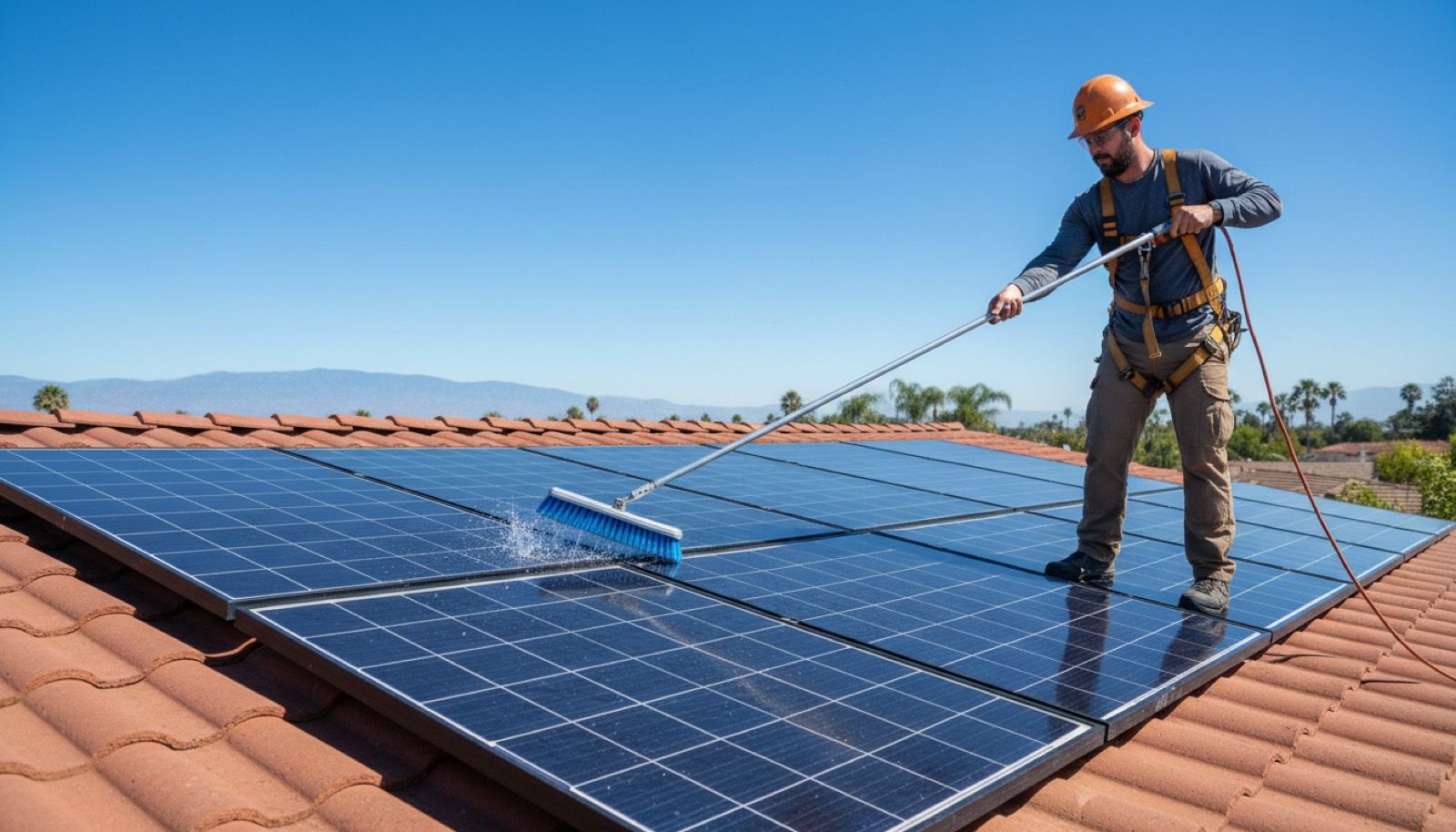
Stockton solar panels lose output to a film of Valley dust, ag-harvest haze, and port grit that rain alone never fully rinses. Grime Getterz cleans panels with soft brushes and purified, mineral-free water: no detergents that void warranties, no hard-water spotting, no pressure, so the glass comes back to full clarity and the system back toward full production.
Why Stockton panels get dirty faster than the brochure said
Solar pencils out beautifully in the Central Valley sun, but the Valley air carries a tax: dust from surrounding almond, walnut, and cherry operations, especially during harvest and field work, bulk-cargo grit drifting off the Port of Stockton, freeway particulates, and pollen. It settles on panel glass all through the long dry season, and the occasional summer sprinkle just turns it to spotted mud. A visible film costs real production, and the loss compounds daily across exactly the months when your panels should be earning the most.
The right way to clean glass that pays you
Panel glass and its anti-reflective coating are the asset, so the method is deliberately gentle: soft brushes and purified deionized water that dissolves and lifts the grime film, then dries spot-free because there are no minerals left to deposit. That last point matters in Stockton: rinsing panels with hard tap water trades a dust film for mineral spotting. We use no detergents or abrasives that could damage coatings or run afoul of manufacturer warranty terms, no pressure washing, and we work panels at the temperature and time of day that avoids thermal shock to hot glass.
Timing and maintenance
The high-value window is the dry season: a cleaning in late spring after the pollen drop, and for many homes a second in late summer or early fall after harvest dust peaks, carries the system through its biggest production months at full clarity. Winter fog and rain handle some of the rest of the year. Recurring schedules take the thinking out of it, and pairing panel cleaning with a roof or house wash visit is efficient since access is already set up. If your monitoring app shows a slow production sag with no fault codes, dirt is the usual suspect.
Questions We Actually Get
How much output do dirty panels actually lose?
Enough to notice on your bill. A dry-season dust film measurably cuts production, and the loss runs every daylight hour until the glass is cleaned. Stockton's ag and port dust makes the film build faster than in cleaner-air regions.
Won't rain clean my panels?
Not adequately. Stockton's rain is concentrated in winter, and light showers on dusty glass leave spotted residue rather than clean panels. The long dry season, peak production time, gets no rinse at all.
Why do you use purified water?
Because tap water here carries minerals that dry into spots, replacing dust with scale. Deionized water lifts grime and dries clean with nothing left behind, and it needs no detergents that could harm coatings or warranty standing.
How often should Stockton panels be cleaned?
Once or twice a year for most systems: late spring, plus late summer if you are near active fields or the port. Monitoring output is the best guide, a gradual sag with no faults usually means dirty glass.
Ready to make it look new again?
Fast scheduling. Photo-documented results. A written quote before any work starts.