
Residential & commercial service
Window Cleaning & Hard Water Stain Removal
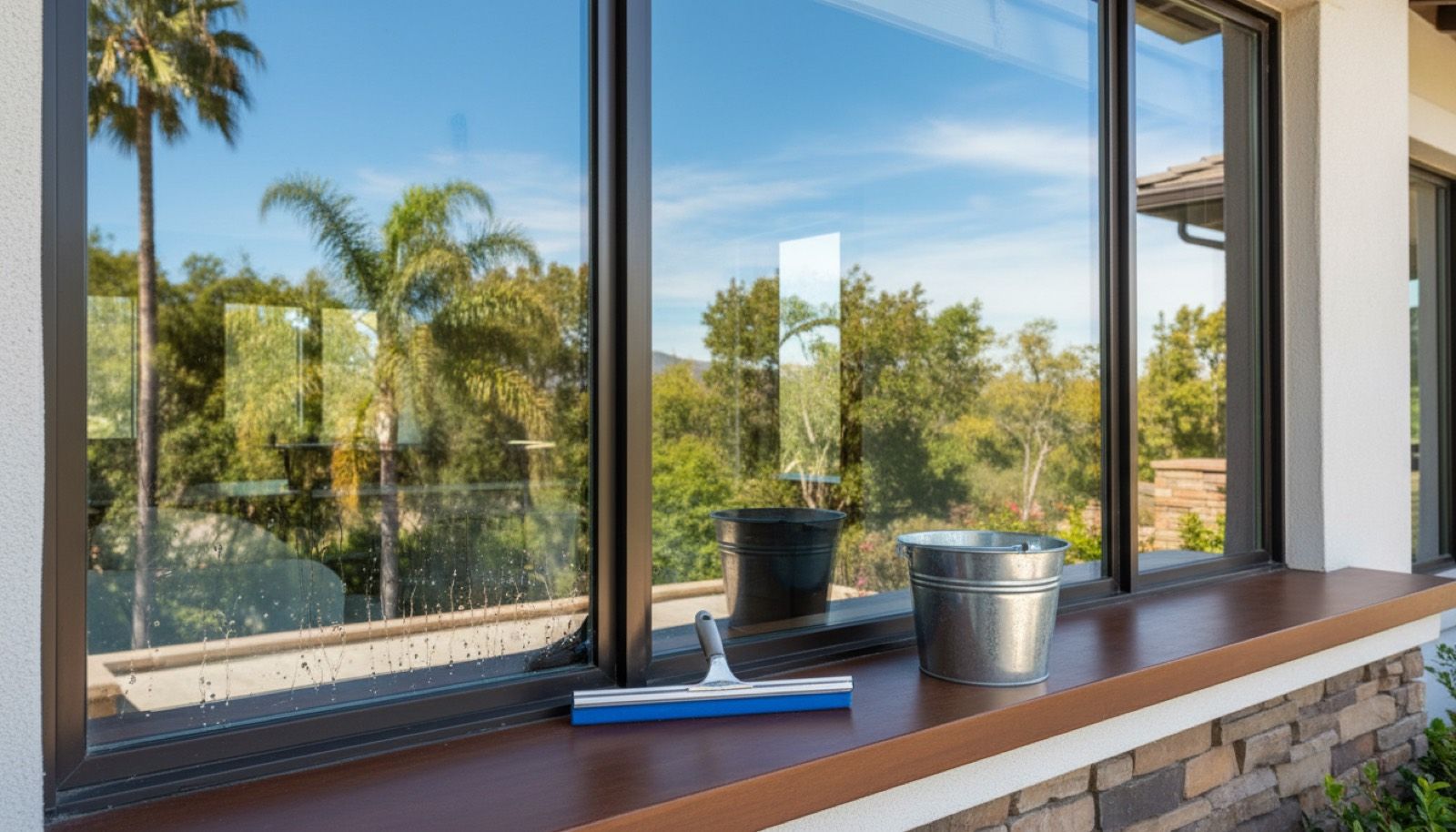
Window cleaning removes dust, grime, and water spotting from your glass, frames, and screens. For exteriors we use a water-fed pole system running purified, deionized water, which scrubs the glass and rinses spot-free with no detergent residue. Interior glass gets traditional squeegee work. It is low pressure by nature, so it is safe on glass, seals, and frames.
What Window Cleaning Includes
Exterior service covers the glass, frames, and sills, with screens removed and washed as part of the job. Interior glass, tracks, and mirrors can be added when you want the full package. We work around your home carefully: screens go back where they came from, sills get wiped rather than left dripping, and second-story glass gets cleaned from the ground with the pole system instead of a ladder against your siding wherever possible.
Why Pure Water Beats a Bucket and Soap
Tap water is loaded with dissolved minerals, which is why hose-rinsed windows dry covered in spots. Our system filters water through deionization resin until virtually nothing is dissolved in it. Pure water is aggressive about grabbing dirt, so a soft brush scrub with it pulls grime off the glass, and the final rinse dries spot-free because there is nothing left in the water to deposit. No soap film, no streaks, and no detergent residue that attracts the next layer of dust.
Hard Water Stains Are a Different Problem
The cloudy white staining on windows near sprinklers is mineral scale from hard irrigation water, and it is the most common glass problem we see in the Valley. In its early stage it sits on the surface and can be removed with mineral-dissolving polish and careful work. Left for years, the alkaline deposits actually etch into the glass, and at that point no cleaner on earth restores it because the damage is in the glass itself. If you have sprinkler spray hitting a window, fixing the spray pattern is as important as cleaning the glass.
Valley Dust, Fog Film, and Freeway Grime
Windows in this region carry a specific mix: fine ag dust through summer and harvest, a greasy traffic film on homes near the freeways, pollen in spring, and the residue Tule fog leaves as it condenses and dries on glass all winter. That mix bonds together into a haze you stop noticing until it is gone. Clean glass changes how whole rooms feel, and it also lets you actually see the condition of your seals and frames.
Cost and Scheduling
Pane count drives the price, with stories, ladder-only access, French panes, and skylights adding to it. Hard water restoration is quoted separately after we see the glass, because surface mineral removal and etched glass are very different jobs. Most homes look sharp on two to four exterior cleanings a year, and a post-harvest cleaning makes a bigger difference here than almost anywhere else. Written flat quote first, always.
Questions We Actually Get
Can you remove hard water stains from my windows?
Usually yes, if the minerals are sitting on the surface rather than etched into it. Surface-stage scale responds to specialized mineral-dissolving polish and comes off completely. Long-neglected stains can permanently etch glass, and etching cannot be polished away by any cleaner. We assess the glass honestly and tell you which situation you have before quoting the work.
Why do my windows streak when I clean them myself?
Almost always residue: minerals in tap water, soap left on the glass, or both drying in the sun. Our pure water system removes the minerals before the water ever touches your windows, so there is nothing left behind to streak. Squeegee technique matters too, which is why interior glass gets done by hand with proper tools.
Do you clean screens and tracks too?
Screens, yes, as a standard part of exterior service, because clean glass behind a dirty screen defeats the purpose. Tracks and sills are wiped on exterior work and detailed when you add interior service. If a screen is torn or a track is damaged, we point it out rather than reinstalling a problem silently.
What happens if it rains right after my windows are cleaned?
Less than you would think. Rain itself is fairly clean water, and spotting mostly comes from rain hitting dirty surfaces above the glass and carrying that grime down. On a freshly cleaned window with clean frames above it, a light rain typically dries with little or no visible spotting. Heavy winter storms are another matter, which is why we schedule around forecasts when we can.
How often should windows be cleaned?
Two to four times a year keeps most homes in this area genuinely clean, given the dust and fog film the Valley throws at glass. Homes near orchards, fields, or freeways benefit from the higher end. Storefronts and offices are a different rhythm entirely, often monthly, and we build recurring commercial schedules for exactly that.
Ready to make it look new again?
Fast scheduling. Photo-documented results. A written quote before any work starts.