
Commercial service
Fleet Yard & Equipment Pad Washing
We degrease the concrete that fleets and heavy equipment live on: parking pads, fuel islands, wash racks, loading areas, and shop aprons. Hot-water cleaning with full wastewater capture runs on a recurring schedule around your operating hours, and every visit is documented with photos.
The soils only working yards produce
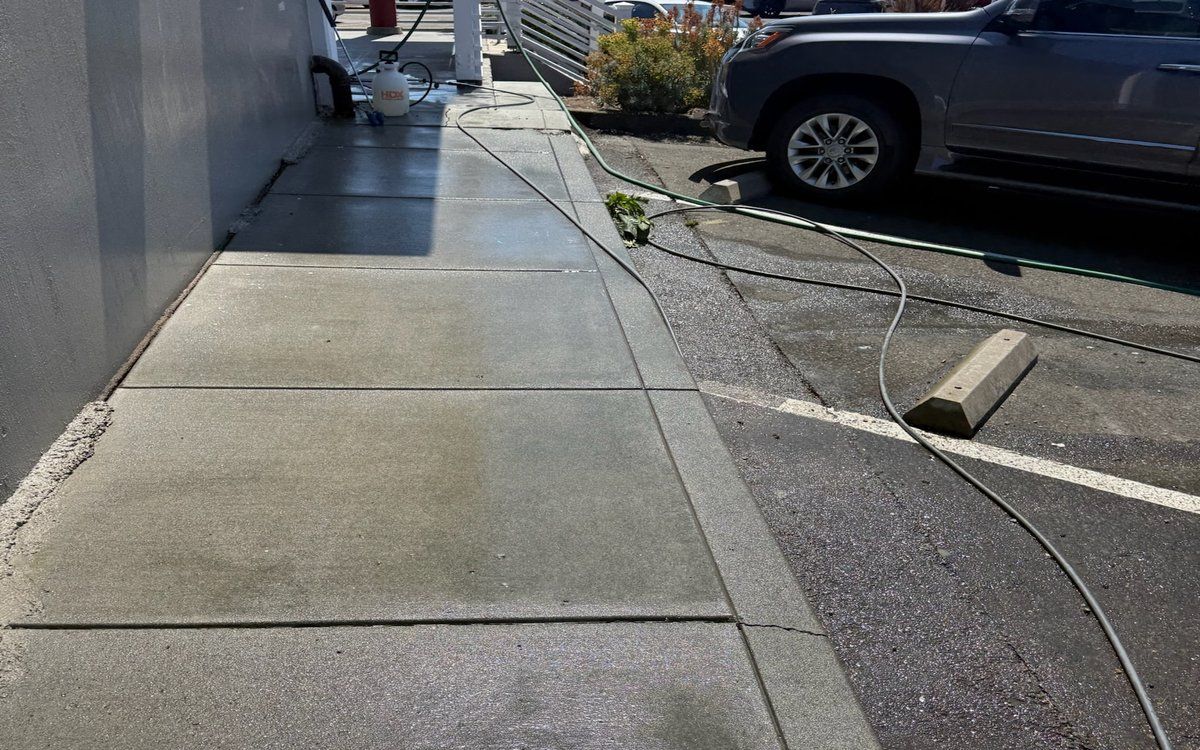
Fleet and equipment concrete carries the heaviest soil load in commercial washing. Diesel, motor oil, hydraulic fluid, and coolant drip where vehicles park and stage. Fuel islands accumulate spill residue that spreads with every rain. Loading areas and shop aprons collect a compacted film of grease, tire rubber, and tracked dirt. Cold water does not touch any of this. We run hot-water units with industrial degreasers, dwell time matched to the contamination, and surface cleaners across the large flatwork so the pad comes out uniform instead of striped.
Why a clean yard is an operations issue
Petroleum film on concrete is a slip hazard for every driver, mechanic, and yard worker who crosses it, and workplace injuries in the yard are a direct operational cost. Accumulated fluids also hide new leaks; on a clean pad, a fresh drip line under a truck is visible at morning walkaround, which is exactly when you want to find it. There is a customer-facing angle too: clients, auditors, and insurers who visit the yard read its condition as a proxy for how the whole operation runs. A degreased, maintained yard supports safety audits instead of complicating them.
Scheduled service around your operation
Yards do not stop, so we schedule around dispatch. Crews work overnight, weekends, or whatever window your rotation leaves open, and recurring service is sequenced by zone so trucks always have somewhere to stage. Typical programs run monthly or quarterly for the full yard with more frequent attention on fuel islands and shop aprons where buildup is fastest. Each visit produces a photo report, which slots directly into your safety and facility maintenance files.
Discharge compliance is the core of this work
Nowhere is wastewater handling less optional than on petroleum-soaked concrete. Wash water from a fuel island or equipment pad is oil-contaminated by definition, and sending it to a storm drain is a violation with real enforcement behind it. Many industrial sites also operate under stormwater permits that make documented washwater handling part of compliance. We capture and recover wash water on every fleet and equipment job, dispose of it properly, and provide the documentation, so your washing program strengthens your compliance file instead of threatening it.
What shapes your quote
Fleet work is priced on contamination, not just concrete. We look at pad and yard square footage, the depth of petroleum buildup, fuel island count and condition, water availability on site, access windows around your operation, and the recovery volume the wash water will require. A yard on a standing schedule carries far less load per visit than a first-time restoration. We walk the site, scope every zone, and fix the recurring plan in writing.
Questions We Actually Get
Can you work around our dispatch schedule?
Yes. We clean in the windows your operation leaves open, nights, weekends, or staged zone by zone while the yard keeps running. Trucks keep moving; the concrete still gets done.
Will hot-water washing damage the concrete or striping?
No. Heat and detergent do the work, so we do not need destructive pressure at the surface. Sound concrete and properly applied striping come through fine; concrete that is already spalling gets flagged to you before we clean it.
How do you handle the oily wash water?
We capture it. Berms and recovery equipment contain the wash water, it gets vacuumed up rather than released, and it leaves the site for proper disposal. Nothing from a fuel island or equipment pad goes to your storm drain.
Does this help with our stormwater permit compliance?
It supports it. Regular degreasing reduces the pollutant load rain can pick up from your yard, and our capture-and-dispose process with photo documentation gives you records that fit directly into a stormwater compliance file.
How often should a fleet yard be degreased?
Fuel islands and shop aprons typically need monthly service; full yard pads run monthly to quarterly depending on fleet size and drip volume. We set the interval after seeing your buildup rate, then adjust it as the yard's condition improves.
Ready to make it look new again?
Fast scheduling. Photo-documented results. A written quote before any work starts.