
Commercial service
HOA & Multi-Unit Pressure Washing
We clean the common areas that HOA boards and multi-unit managers answer for: walkways, breezeways, pool decks, stairwells, building exteriors, and trash enclosures. Service runs on a recurring schedule with off-hours windows available, and every visit is documented with photos so the board sees exactly what was done.
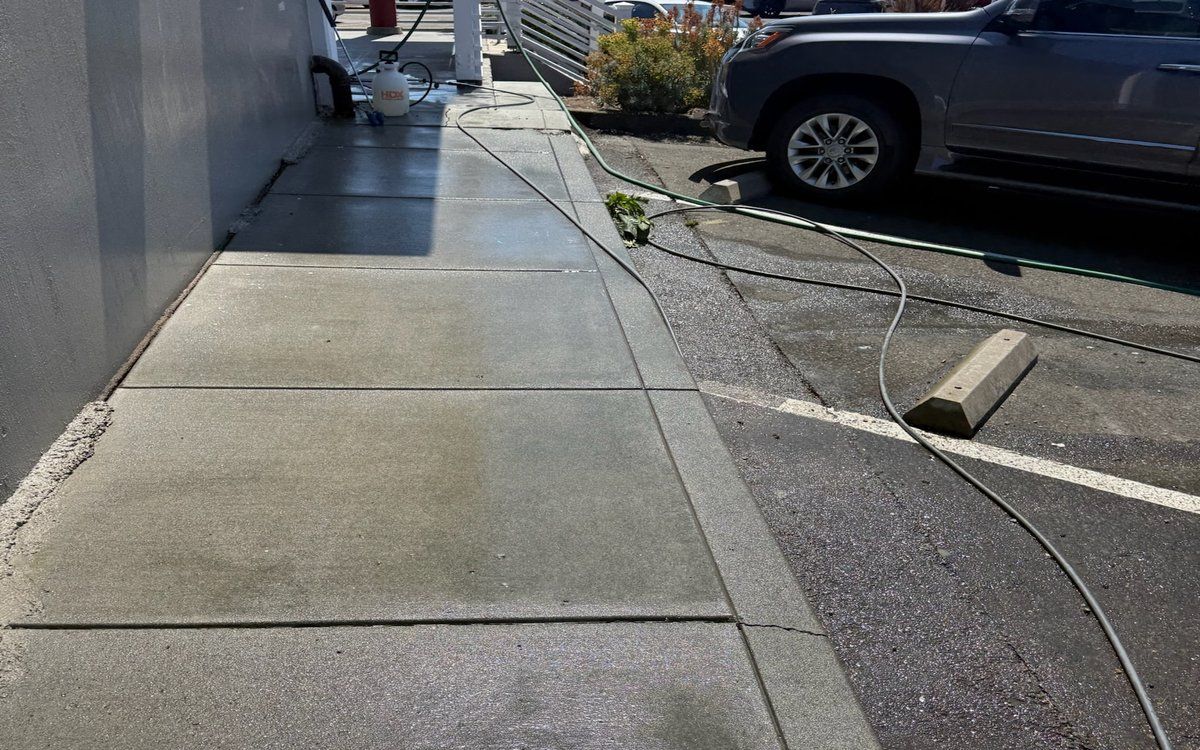
Common-area surfaces and what grows on them
Shared walkways in our climate grow algae fast, especially on north-facing and tree-shaded runs, and algae on smooth concrete is as slick as ice when wet. Breezeways collect cobwebs, dust, and bird droppings. Pool decks build up sunscreen film and organic staining. Trash enclosures develop grease and odor that residents complain about long before a board meeting. We clean all of it on a set rotation: flatwork with surface cleaners for an even finish, building exteriors and breezeways with soft washing where the siding or stucco calls for lower pressure, and enclosures with hot water and degreaser.
Liability is the real driver
For an association, the strongest argument for scheduled washing is not appearance, it is the slip-and-fall exposure sitting on every algae-slicked walkway and stair landing. When a resident or guest goes down, the claim goes to the association, and the first question is whether the hazard was being maintained. A standing service contract with dated photo reports is exactly the paper trail that question demands. Appearance still matters: clean common areas hold property values, reduce complaint volume, and make the community easier to sell units in. But the liability math alone usually justifies the schedule.
Scheduled service built for communities
We map the property into zones and rotate through them on a schedule the board approves: quarterly full-property service, monthly attention for pool decks and high-traffic paths, or whatever cadence fits the community. Crews can work early mornings to stay out of residents' way, and we coordinate notices with your property manager so nobody is surprised by hoses in the breezeway. After each visit, the manager gets a photo report by zone, ready to forward to the board.
Water use and runoff done right
Multi-unit properties have landscaping, storm drains, and residents' vehicles in close quarters, so runoff control matters. We keep detergents out of planted areas, protect storm drain inlets, and capture wash water on greasy surfaces like trash enclosures where discharge rules apply. Cleaning solutions are applied at the correct dilution for each surface, so stucco, painted siding, and decorative concrete come out clean without damage.
What shapes an HOA contract quote
The quote follows the property: number of buildings, linear footage of walkways and breezeways, pool and amenity areas, the count and condition of trash enclosures, and the frequency the board wants. Communities that maintain a regular cadence carry a lighter soil load per visit than a once-a-year restoration job, and the contract reflects that. We walk the property with your manager, define the zones and scope in writing, and the board approves a fixed recurring plan.
Questions We Actually Get
Can you work around residents?
Yes. We schedule early-morning windows, coordinate advance notice through your property manager, and cone off wet areas as we move. Most residents never interact with the crew at all.
How often should HOA common areas be pressure washed?
Quarterly is the typical baseline for walkways and breezeways, with monthly service for pool decks and high-traffic paths during the busy season. Shaded, algae-prone communities may need shorter intervals. We recommend a cadence after walking the property.
Will pressure washing damage stucco or painted siding?
Not the way we do it. Vertical surfaces get soft washing: low pressure with the right cleaning solution, which removes algae and grime without stripping paint or gouging stucco. High pressure is reserved for concrete flatwork that can take it.
What does the board get as documentation?
A photo report after every visit, organized by zone, showing what was cleaned. It gives the board proof of vendor performance and gives the association a dated maintenance record if a slip-and-fall claim ever comes.
Can the schedule change seasonally?
Yes. Many communities run heavier service in winter and spring, when rain feeds algae growth, and lighter service in summer. The contract sets the annual plan, and we adjust the rotation with your manager as the property's needs shift.
Ready to make it look new again?
Fast scheduling. Photo-documented results. A written quote before any work starts.