
Commercial service
Parking Structure & Garage Cleaning
We clean parking garages and structures deck by deck: tire marks, oil-stained stalls, drive aisles, stairwells, and elevator lobbies. Work is scheduled off-peak on a recurring plan, wash water is captured and recovered as oil-contaminated discharge requires, and every service closes with a photo report.
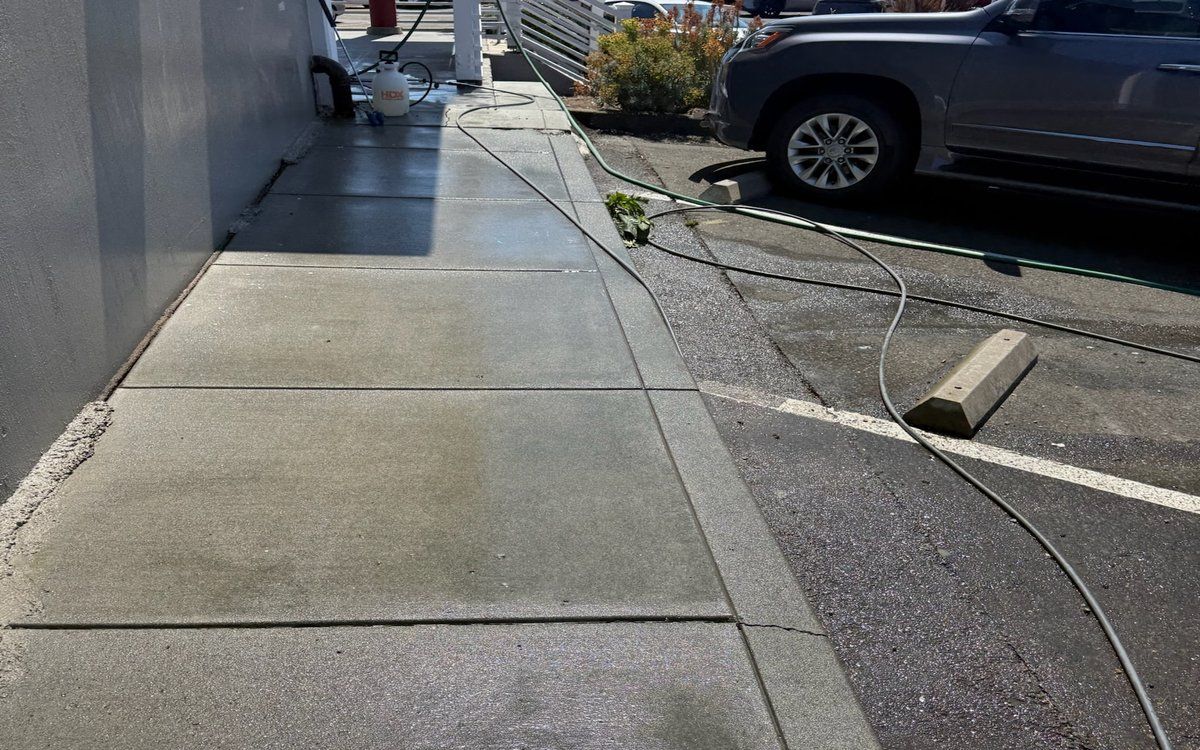
What builds up in a garage
Parking structures collect a specific set of soils. Tire marks scrub onto the deck at every turn and ramp. Oil and coolant drip in the stalls and migrate along the drainage slope. Brake and exhaust dust settle as a gray film that swallows light and dulls striping. Stairwells and elevator lobbies collect trash, spills, and urine odor that riders notice before anything else. We clean decks and aisles with surface cleaners and hot water for the petroleum staining, and we hit stairwells and lobbies with hot water and disinfecting detergents, because those small spaces shape how the whole structure is perceived.
Clean decks are a safety and perception issue
A dark, grimy garage feels unsafe, and tenants, shoppers, and monthly parkers make decisions on that feeling. Clean concrete reflects light, which makes existing fixtures work harder and sightlines read clearer at no added utility cost. Striping and wayfinding markings regain contrast when the film around them is removed. On the liability side, oil patches in stalls and grime on ramp surfaces are slip and skid hazards for pedestrians and vehicles alike, and stairwell conditions are a standing complaint generator. A documented cleaning cycle addresses the hazards and gives management the record to prove it.
Deck-by-deck scheduling that keeps you open
Garages cannot close, so we do not close them. We sequence the work deck by deck or zone by zone during your lowest-occupancy windows, typically overnight or weekends, coordinating with your parking operator on signage and stall closures. A recurring plan rotates through the full structure over the cycle: full-deck cleaning on the schedule that traffic demands, with stairwells and lobbies on a shorter interval because they foul faster. Photo reports document each zone as it is completed.
Oil means wastewater recovery, full stop
Garage wash water carries oil, and oil-laden discharge cannot go to the storm system. In a structure, it often cannot go to the floor drains either without knowing where they lead; many garage drains connect to storm lines, not sanitary. We identify the drainage before work starts, capture and recover wash water, and dispose of it properly. This is the difference between a compliant cleaning and an environmental violation with your property's name on it, and it is standard on every garage job we run.
What shapes your quote
Garage pricing follows the structure: number of decks and total square footage, stall count and the density of oil staining, ramp and turn areas with heavy tire marking, stairwell and elevator lobby count, drainage configuration, and access windows. First-time cleanings of a neglected structure carry more soil than a maintained one on a recurring cycle. We walk the structure, map the zones, and put a fixed rotation in writing.
Questions We Actually Get
Do we have to close the garage for cleaning?
No. We work deck by deck in off-peak windows, closing only the zone in progress. Your operator keeps the rest of the structure open and revenue flowing throughout.
Can you actually get the oil stains out of the stalls?
Hot water and degreaser remove the surface oil and dramatically lighten the staining. Old stains that have soaked deep into unsealed concrete may leave a shadow, and we tell you which ones will before we start rather than after.
Where does the dirty water go?
Into our recovery equipment, not down your drains. Garage wash water carries oil, and many garage drains lead to the storm system, so we capture, contain, and dispose of wash water off site in compliance with discharge rules.
How often should a parking structure be cleaned?
Full-deck cleaning once or twice a year is typical, with stairwells and elevator lobbies on a monthly or quarterly cycle because they degrade fastest. Traffic volume and exposure set the right interval, and we recommend one after a walkthrough.
Do you clean stairwells and elevator areas too?
Yes, and we treat them as a priority. They are the spaces every parker touches on foot, and hot water with disinfecting detergent handles the spills and odor that pressure alone does not fix.
Ready to make it look new again?
Fast scheduling. Photo-documented results. A written quote before any work starts.