
Commercial service
Restaurant & Drive-Thru Pressure Washing
We degrease drive-thru lanes, dumpster pads, patios, entries, and back-of-house concrete for restaurants and QSR operators. Crews work overnight between close and open on a recurring schedule, with wastewater recovery on every grease job and a photo report after every visit.
Grease is the whole problem
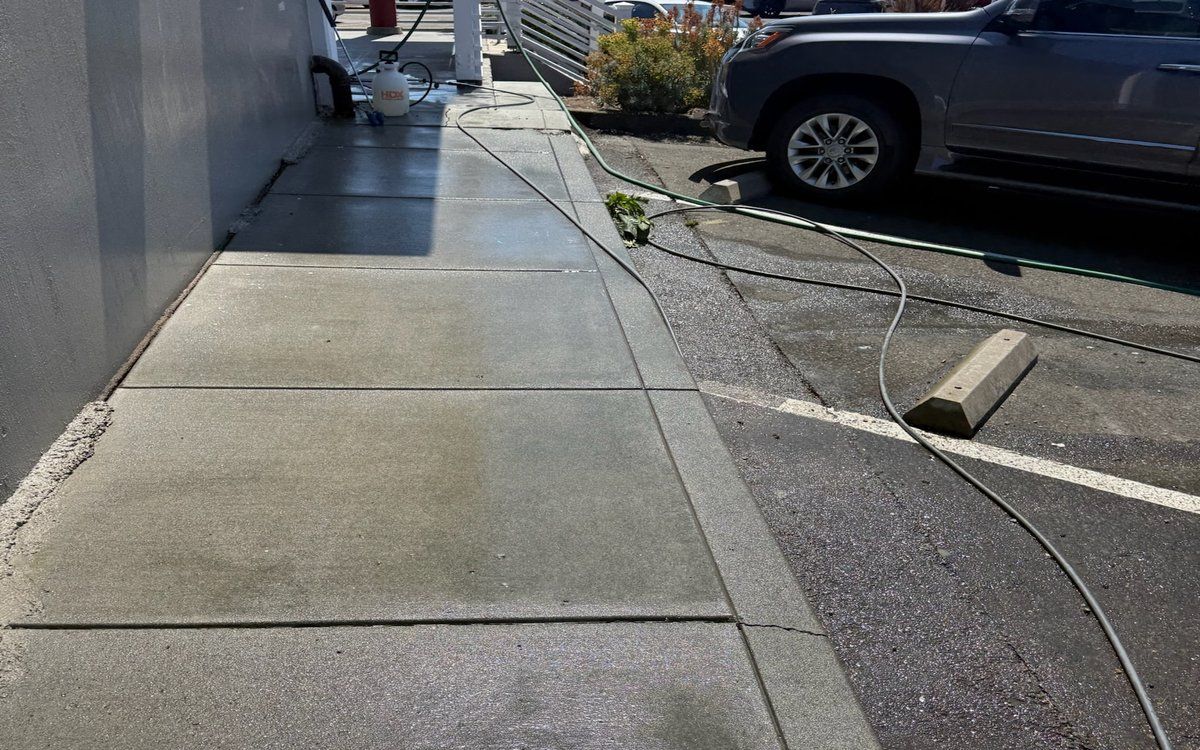
Restaurant exteriors fail in predictable places. The drive-thru lane builds a film of oil drips and exhaust residue that darkens the concrete and turns slick in the first rain. The dumpster pad collects grease and food waste leachate that spreads, stains, and draws pests. The back door area, where staff haul trash and grease bins, becomes the slickest concrete on the property. Patios and entries collect gum, spills, and bird droppings. Cold water smears grease around; it does not remove it. We run hot-water machines with degreaser, which breaks the grease down and lifts it off the surface, and we use surface cleaners on lanes and patios for an even, stripe-free finish.
Inspections, brand standards, and slip claims
A greasy dumpster pad is not just ugly. Health inspectors look at exterior waste areas, and a pad drawing flies and vermin invites a violation that follows your record. Franchise operators answer to brand appearance standards on top of that, and a failed site audit is a conversation nobody wants with corporate. Meanwhile, the slickest slip hazards on the property are the ones your own staff cross every shift at the back door. Scheduled degreasing addresses all three: it keeps the waste area inspection-ready, the customer-facing lane and patio on brand, and the employee paths safe, with photo documentation to prove all of it.
Overnight service that fits restaurant hours
Restaurants cannot close for cleaning, so we do not ask them to. Crews arrive after close, work the lane, pads, and patios, and are gone before your opening crew shows up. Recurring service runs on a route schedule, typically monthly for the full site with more frequent dumpster pad attention where volume demands it. Multi-unit operators can put every location on one schedule with one point of contact and consistent scope across stores.
Wastewater recovery is not optional on grease
Wash water carrying grease and oil cannot legally go down the storm drain; that discharge lands on the property owner, not the cleaning contractor who caused it, unless the contractor was doing it right. We capture and recover wash water on drive-thru lanes and dumpster pads, then dispose of it properly. Ask any vendor bidding your site how they handle discharge. If the answer is a squeegee and a shrug, keep looking.
What shapes your quote
Frequency and grease load drive restaurant pricing more than raw square footage. We look at the length and condition of the drive-thru lane, the state of the dumpster pad, patio and entry square footage, whether the site has been maintained or needs a first-visit restoration, and how many visits per month the operation calls for. Multi-site operators get a single contract covering all locations. Everything is scoped in a walkthrough and fixed in writing before we start.
Questions We Actually Get
Can you clean while we're closed overnight?
Yes, that is our standard for restaurants. Crews work between close and open, and the site is dry and ready before your first shift arrives. Twenty-four-hour locations get service scheduled in the slowest overnight window.
How often should a drive-thru lane be degreased?
Monthly for most sites, with high-volume stores often needing service every two weeks. The lane rebuilds its grease film continuously, so the interval depends on car count. We set the frequency after seeing the site's condition.
Do you handle the grease bin and dumpster area?
Yes. The pad, the enclosure walls, and the surrounding concrete get hot water and degreaser, with the wash water captured and hauled rather than pushed to the drain. It is usually the most valuable part of the visit.
Will this help with health inspections?
It removes a common exterior violation source. Inspectors flag waste areas that attract pests, and a degreased, odor-controlled pad takes that issue off the table. Your photo reports also show a documented sanitation routine.
What about the wastewater? Are we liable for runoff?
Discharge violations land on the property, which is why we recover wash water on all grease work instead of letting it reach the storm drain. You get compliant cleaning and documentation of it, so the liability question is answered before it is asked.
Ready to make it look new again?
Fast scheduling. Photo-documented results. A written quote before any work starts.